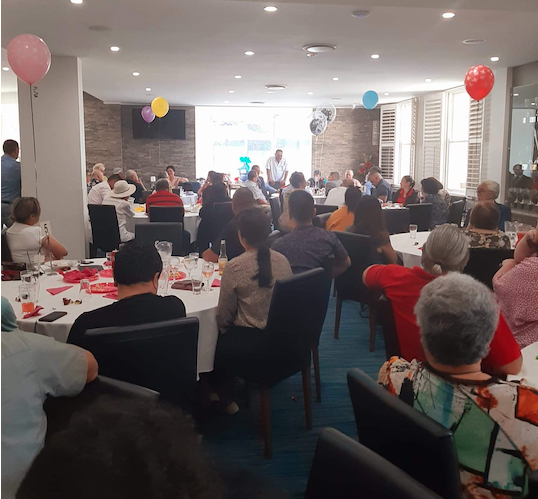
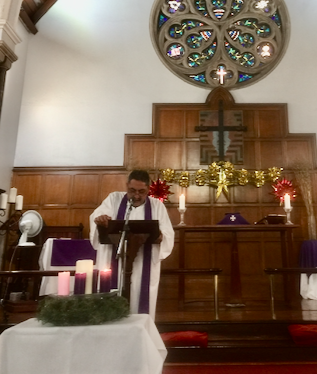
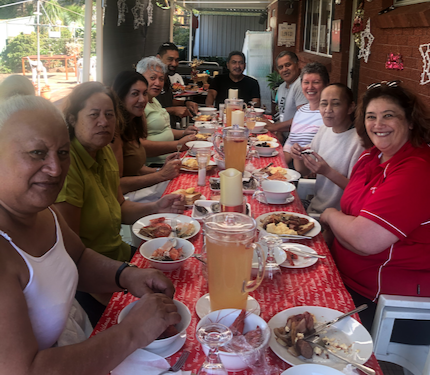
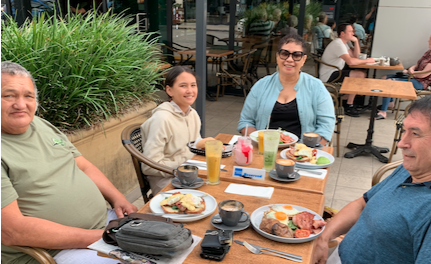
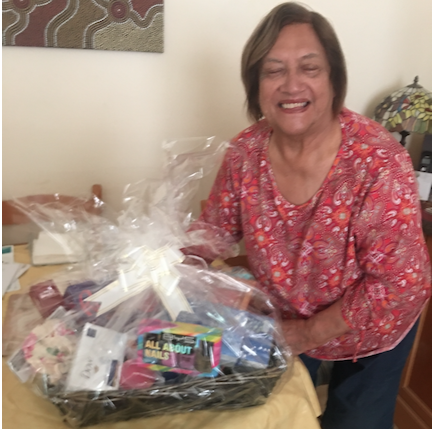
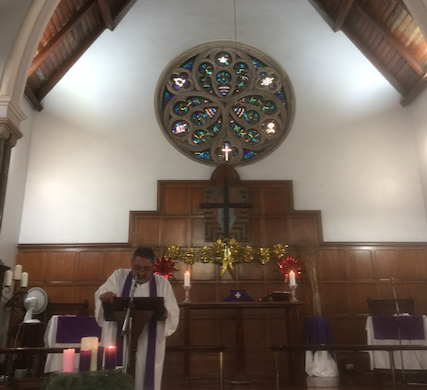
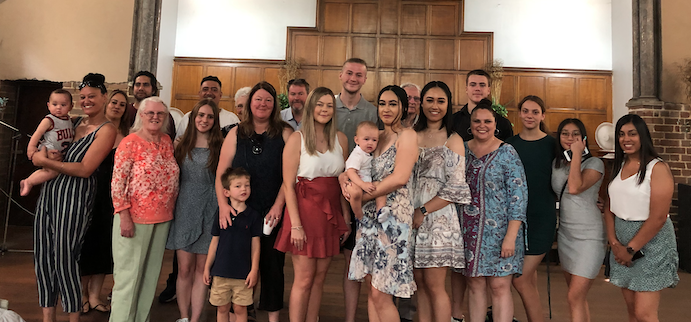
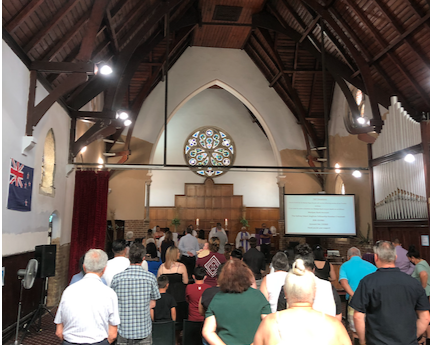
Archdeacon Karipa celebrated his 20th year as priest in charge of the Sydney Maori Anglican Fellowship Maori based at Te Wairua Tapu on the 17th of December. Due to restrictions on gatherings, thank you to the ministry team for organising this lunch. We shared a marvellous meal and heard stories of shared experiences. Thank you to Archdeacon for his honest and humorous sharing, as he quoted “It’s been my privilege to be your priest these last 20 years”.
Sentence: Bind up the broken-hearted, proclaim liberty to the captives and release to the prisoners, proclaim the year of the Lord’s favour, the day of vengeance of our God. Isaiah 61:1-2
Collect: Almighty God, you sent your servant John the Baptist to prepare the way for the coming of your Son; grant that those who proclaim your word may so guide our feet into the way of peace, that we may stand with confidence before him when he comes in his glorious kingdom; through Jesus Christ our Judge and our Redeemer. Amen.
Gospel: John 1:6-8, 19-28 The Testimony of John the Baptist There was a man sent from God, whose name was John. 7He came as a witness to testify to the light, so that all might believe through him. 8He himself was not the light, but he came to testify to the light. This is the testimony given by John when the Jews sent priests and Levites from Jerusalem to ask him, ‘Who are you?’ 20He confessed and did not deny it, but confessed, ‘I am not the Messiah.’ 21And they asked him, ‘What then? Are you Elijah?’ He said, ‘I am not.’ ‘Are you the prophet?’ He answered, ‘No.’ 22Then they said to him, ‘Who are you? Let us have an answer for those who sent us. What do you say about yourself?’ 23He said, ‘I am the voice of one crying out in the wilderness, “Make straight the way of the Lord”, as the prophet Isaiah said. Now they had been sent from the Pharisees. 25They asked him, ‘Why then are you baptising if you are neither the Messiah, nor Elijah, nor the prophet?’ 26John answered them, ‘I baptise with water. Among you stands one whom you do not know, 27the one who is coming after me; I am not worthy to untie the thong of his sandal.’ 28This took place in Bethany across the Jordan where John was baptising.
Tena koutou katoa e te whanau o Te Wairua Tapu.
Today is the third Sunday in Advent. As I’ve pointed out, Advent is a time of preparation for the coming of the Lord. A time for us to let go of old stories and re-discover a new way forward and a new way of being.
And so, John says, “Among you stands one whom you do not know.” Those are John’s words to the religious authorities who went to see him. They are also his words to us today. So who is the one? Who do you think John is referring to? Ot course, most of you would probably say “JESUS.” That’s the usual and most likely answer. That’s the answer I’ve always given. But today I want us to rethink the usual answer. Is Jesus the one and only or could there be others? Have there been others before Jesus? Will there be others after Jesus? I want us to hear John’s words in a bigger context. I want us to consider that maybe we sometimes focus so much on Jesus that we actually lose the gospel, and the messenger overshadows the message.
Could the one who stands among us be you? Or me? A a visitor that shows up to church on a Sunday? Or a stranger on the street? I’m not suggesting that Jesus is the wrong answer. But for us to consider there might be more than one right answer. What if John is not referring to the one as an exclusion of all others but as the ultimate example? And, what if John is saying to us that this one has always been among us and still is? In other words, this line of inquiry suggests that we didn’t recognise the one then and we still don’t now. And that raises a good question. Why don’t we recognise the one who stands among us?
Maybe the greatest barrier to seeing the divine presence among us is that we already have an idea or image of who that one is or should be and what that one should look like and do. In other words, we think we know and we stick with what we think we know. We can’t see the one because he or she doesn’t meet our expectations or fit our categories of who he or she can be. Sometimes, we don’t see the one among us because he or she stands outside the box of our beliefs. And more often than not we see and hear in such a way that it only confirms what we already believe.
That’s what the priests and Levites are doing with John. They come to him with the usual answers of who he should be; the Messiah, Elijah or the prophet. But he won’t allow them to do that to him. John doesn’t fit their expectations or categories because they don’t know the one who already stands among them. Sometimes we don’t even see the one who stands among us. A good example is our church building. We’ve been hoping and praying for our building to be fixed up for 35 years and it finally looks like it’s going to happen. But it’s taken a multitude of divine presences. Or as we like to put it, ‘Drops from God.’ This kind of thing is happening all the time. John is not announcing something new. He says so. “I am the voice of one crying out in the wilderness, ‘Make straight the way of the Lord,’ as the prophet Isaiah said” (John 1:23). Before John there was Isaiah. And don’t think John was the first to see the spirit descend upon the one. It also came upon Isaiah. He says,
“The spirit of the Lord God is upon me, because the Lord has anointed me; he has sent me to bring good news to the oppressed, to bind up the brokenhearted, to proclaim liberty to the captives, and release to the prisoners” (Isaiah 61:1).
Whenever or wherever these spiritual drops happen they point to one who stands among us. And more often than not we only recognise the one on reflection of our lives. And by the way, who of you have helped fix the church? Maybe you were the one of many or it was none of you but It could have been you. You might have done it if you were there. You’ve done that kind of thing before, right? Helped. And, you’ve had others do it for you, right? So tell me. Who has been one that stood among you and made the divine present? When have you looked back and seen that one doing some kind of spiritual healing in your life? And when have you been that one for another?
“Among you stands one whom you do not know.” So who is this one? What do you think? Who is John referring to? Yes, it’s Jesus. And yes, it was John and Isaiah. And yes, it can be you and me. That’s not a diminishment of who Jesus is or what he has done. It’s rather, a fulfillment of who he is and what he has done. I am not saying anything Jesus himself did not first say. “Very truly, I tell you, the one who believes in me will also do the works that I do and, in fact, will do greater works than these” (John 14:12). “Among you stands one whom you do not know.” They are words of hope, words of promise and words of God’s faithfulness. Amen.
Archdeacon Kaio Karipa
The Venerable Kaio Karipa Chaplain Sydney Maori Anglican Fellowship Church of Te Wairua Tapu www.tewairuatapu.com.au
Readings: Isaiah 40:1-11 Psalm 85:1-2,8-13 2 Peter 3:8-15a Mark 1:1-8
Sentence: Prepare the way of the Lord; make his paths straight. For the glory of the Lord shall be revealed, and all people shall see it together. Luke 3:4; Isaiah 40:5
Collect: God for whom we wait and watch, you sent John the Baptist to prepare for the coming of your Son: give us courage to speak the truth even to the point of suffering. This we ask through Christ our Saviour. Amen.
Gospel from Mark 1:1-8 The Proclamation of John the Baptist The beginning of the good news of Jesus Christ, the Son of God. As it is written in the prophet Isaiah, ‘See, I am sending my messenger ahead of you, who will prepare your way; 3the voice of one crying out in the wilderness: “Prepare the way of the Lord, make his paths straight”, 4John the baptiser appeared in the wilderness, proclaiming a baptism of repentance for the forgiveness of sins. 5And people from the whole Judean countryside and all the people of Jerusalem were going out to him, and were baptized by him in the river Jordan, confessing their sins. 6Now John was clothed with camel’s hair, with a leather belt around his waist, and he ate locusts and wild honey. 7He proclaimed, ‘The one who is more powerful than I is coming after me; I am not worthy to stoop down and untie the thong of his sandals. 8I have baptised you with water; but he will baptise you with the Holy Spirit.’
Tena koutou katoa e te whanau o Te Wairua Tapu.
Well whanau, I don’t want to be the bearer of bad news but we won’t be having karakia at the church until work is completed on the roof. There is far to much dust falling since the roofies stripped off all the slate tiles. So, we will keep you informed as to when we will return.
Last Sunday was the First Sunday of Advent and we heard about the sun being darkened, the moon no longer giving it’s light, the stars falling from the sky and the powers of heaven being shaken. It’s the end. That’s probably how some us felt when we closed the church last Sunday. It was hard enough when we were closed for Easter. Now it looks like we won’t be celebrating Christmas together as the body Christ at Te Wairua Tapu! But it’s not the end of the world or the end of life. It’s rather an ending of our story for another year. Not the way we planned it but here we are. You see, we have heaps of stories, events and experiences that have shaped and continue to form who we are, how we are, and the ways in which we see and relate to God, the world, each other and ourselves. Every story we have gives us meaning, identity and direction.
Sometimes, however, our stories can no longer support our lives. Instead of growing our lives they stop our growth and can no longer take us no further. It’s not that they are necessarily bad or wrong, it’s just that we need a different story, a bigger story and a life giving story. In some ways we are always living into that new story. That means we must let go of our stories so that a new story can be told, a new life can be lived and “the one who is more powerful” can come to us. That’s hard work and it’s often painful. Most of us hold onto our stories pretty tightly even when they are no longer helpful and often in spite of the harm they cause us. We cling to our stories believing that any story is better than no story. Letting go of our old stories, is what today’s gospel calls “preparing the way of the Lord.” It’s the way by which we re-calibrate our lives to “the one who is more powerful.”
If last week’s gospel revealed Advent to be a season of necessary endings, then this week’s gospel reveals Advent to be a season of time in the wilderness. It’s not by accident that today’s gospel takes us to the wilderness. Our meeting with John the Baptist is no fluke. The lectionary, the assigned scripture readings for each Sunday, is not simply luck of the draw. There is a particular sequence between last week, the First Sunday of Advent, and today, the Second Sunday of Advent. It’s a movement that takes us from an ending to the wilderness. It reflects the reality of our lives. It’s a sequence I know well. Whenever I have accepted an ending of one of my stories I have always ended up in the wilderness. Overwhelmed and a bit lost, vulnerable and at risk, a bit afraid, angry and resentful. The old story ends and the new one starts but not totally clear. I am always in that in-between space waiting to see what might happen. Whether or not I know it, I wait for “the one who is more powerful.” Waiting for Jesus.
I reckon most of you reading this know what I mean. You could all speak about a time in the wilderness. Think about your own stories – the ones that have ended or the ones that are ending – and you’ll understand what I’m talking about. The most significant changes and transitions in our lives lead us to the wilderness. As difficult as the wilderness maybe it’s the place in which we prepare the way of the Lord. After the Israelites left Egypt they went to the wilderness. It was their preparation for the promised land. After Jesus was baptised he went to the wilderness. It was his preparation for his public ministry. And in today’s gospel, John the Baptist appears in the wilderness helping the people prepare for the coming of “the one who is more powerful.” That’s what time in the wilderness does. It prepares the way of the Lord.
Time in the wilderness seems to be the norm for God’s people. Wilderness time doesn’t make “the one who is more powerful” show up. It insures that when he does we will be there, we will be ready and we will have shown up. The wilderness isn’t the geography around us but the geography within us. It’s our interior landscape. There is no where to hide in the wilderness. There are no illusions or distractions. The wilderness strips us of all pretense and we are left to face up to ourselves, to examine our hearts and to confess the truth about our lives.
The wilderness isn’t a place of exile or punishment, it’s a place of self-discovery. We discover that we can no longer live by our own self-sufficiency. That doesn’t mean we are deficient or insufficient. It means there is more to life and more to us than what our own self-sufficiency can give. Many of our stories have, however, convinced us that we are or should be self-sufficient. The wilderness always proves otherwise. In the wilderness we ultimately discover that we are in need of and have no where else to turn but to “the one who is more powerful.” It reveals that our self-sufficiency is our downfall.
Maybe that’s why John the Baptist is our wilderness guide and why he is called the Forerunner of Christ. That’s why he is the voice crying out in the wilderness, “Prepare the way of the Lord, make his paths straight.” John knows what he’s talking about. Look at him – clothed with camel’s hair and a leather belt around his waist, eating locusts and honey. That’s more than a description of his wardrobe and diet. It reveals the state of John’s heart and it shows that he has let go of all of his pretense. He knows he’s dropped all of his defences and he entrusts everything to “the one who is more powerful.” So much so that he declares himself unworthy to even untie Christ’s sandals. You see, when we let go, the wilderness opens our minds to a bigger story, opens our heart to a new life and turns our gaze to the one who is coming. It frees us of pretense, pre-occupations and the accumulations of life that weigh us down. It restores to us the original beauty of our creation and creates space, time and place for the one who is coming.
What stops us from allowing Christ to come to us is the power of our own self-sufficiency, which is usually disguised as busyness, we have no free space in our diaries, the never ending to do lists and the exhaustion that permeates so many of our lives. It’s at the core of many of the judgments we make about others. The unending search for approval, recognition, and accomplishment is driven by a story of self-sufficiency. Of course, we aren’t helpless. We have responsibility for ourselves and to others. We have resources and abilities. But we live overly self-sufficient lives that we close ourselves off. We isolate, therefore, we declare the way of the Lord to be a closed road. Maybe the greatest tragedy is that when we live from a place of self-sufficiency we make ourselves the more powerful one and we have no need of each other or of Christ, the one who is coming. Maybe our self-sufficiency is really the only thing that ever keeps Christ from coming to us. So give it up! Trust in the wilderness of Advent. That just might be the beginning of the good news of Jesus Christ, the Son of God, in our lives. Then you and I would discover that our lives are sufficient for God and we would know ourselves to be God-sufficient people. Amen.
The Venerable Kaio Karipa Chaplain Sydney Maori Anglican Fellowship Church of Te Wairua Tapu www.tewairuatapu.com.au
Unfortunately the Church of Te Wairua Tapu will be temporarily closed to our fellowship and congregation until all work on the roof is completed. We will inform you when we return for karakia.
Ma te Atua hei manaaki i a koutou katoa
The Venerable Kaio Karipa Chaplain Sydney Maori Anglican Fellowship Church of Te Wairua Tapu www.tewairuatapu.com.au
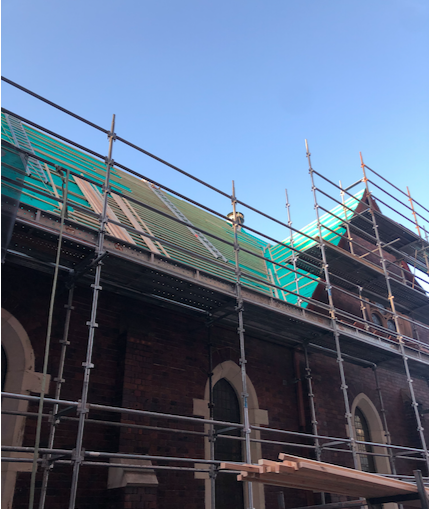
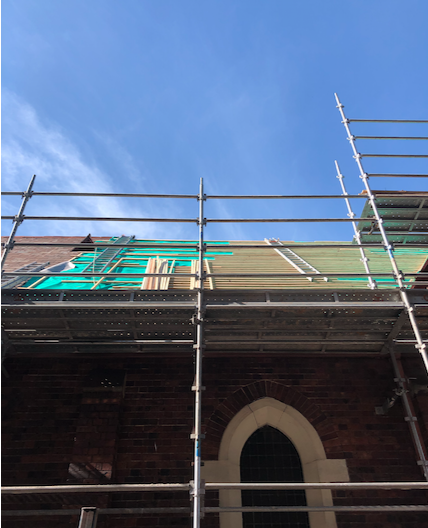
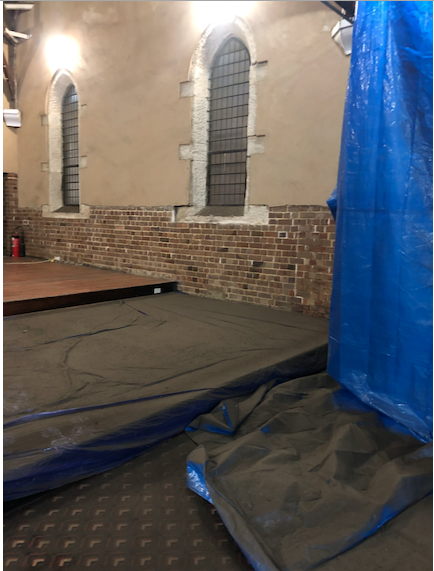
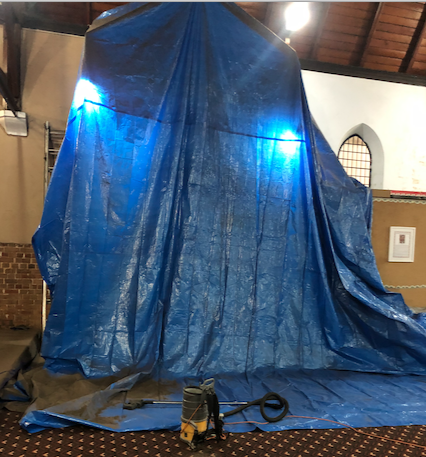
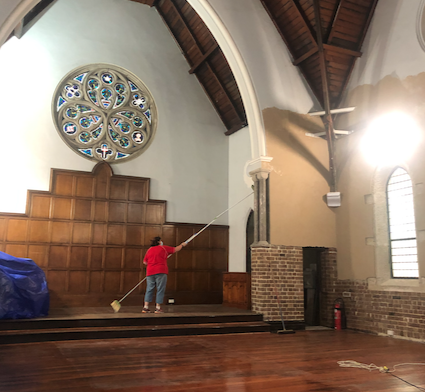
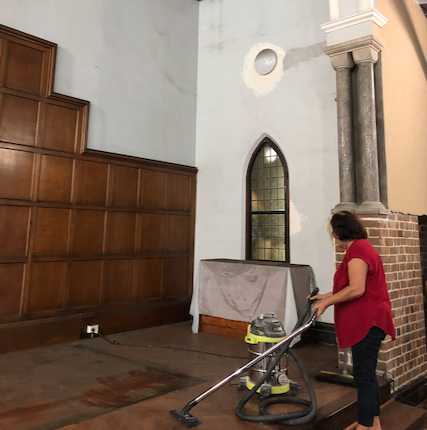
Yes our prayers have been answered and the old slate roof is being removed and new battens etc being laid before the new tiles. A HUGE thank you to Miriam, Robyn, Pat, Terry, Wiremu and Greg for the turnaround on Saturday’s so our Church is worthy of praising God!
Saturday morning and the dust from the roofOur organ’s dust cover and vacuuming the dust before the tarp is removed outside to be fully vacuumedTransformation begins
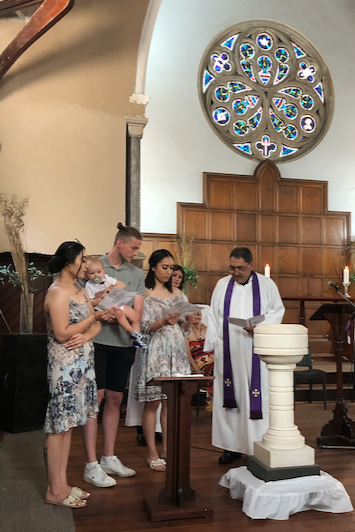
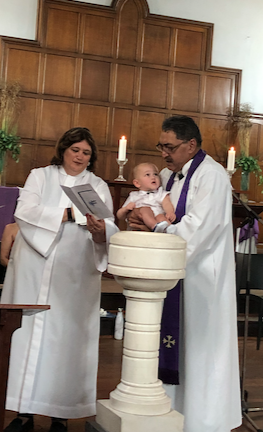
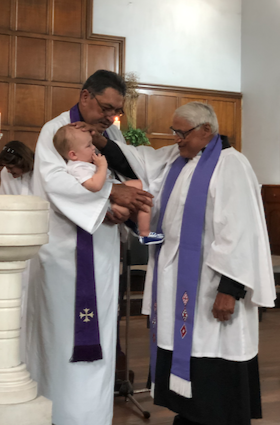
We welcomed Onyx and four generations of his Whanau to his Baptism today. Like Onyx, both his mum and aunt (Godmother) were Baptised as one year old children by Archdeacon Karipa. As Archdeacon Karipa shared, this is generational history.
Sentence: `Heaven and earth will pass away,’ says the Lord, `but my words will not pass away.’ Mark 13:31
Collect: God of hope, When Christ your Son appears may he not find us asleep or idle, but active in his service and ready; through the same Jesus Christ our Redeemer. Amen.
Readings: Isaiah 64:1-9 Psalm 80:1-7, 17-19 I Corinthians 1:3-9 Mark 13:24-37
Today is the first Sunday in Advent. And, Advent is the season where the church waits and prepares for both the birth of Christ at Christmas and the return of Christ at his Second Coming. Advent is not just a season of the church year. It’s a reality of life. It happens in different ways and it comes at various points in life, not just the four or five weeks before Christmas.
“In those days … the sun will be darkened, and the moon will not give its light, and the stars will be falling from heaven, and the powers in the heavens will be shaken.” These are Jesus’ words to his disciples. The disciples have been admiring the temple and they are impressed. Jesus, however, is telling them that change is coming. Their world is going to fall apart.
If you have ever experienced significant change in your life, whether you wanted it or not, you know about “those days.” So you also know about Advent. You know what it’s like to enter the darkness of change. All change, whether welcome or unwanted, brings some kind of loss to us. It’s a dark place. It may be the loss of a relationship, the loss of a loved one, the loss of what is comfortable, familiar and safe. Regardless, the world as we have known it has ended. Covid 19 is a good example, we as a church must change and we are!
You see, the Advents of our lives set before us important questions. How will we find our way forward when the usual lights that illuminate our path no longer shine? What do we do when it feels as if our world is falling apart? Where do we go when it seems as if darkness is our only companion and God is no where to be seen?
We all go through life changes, and we all experience dark times in our lives. But the dark times of life are threshold moments. And the temptation is to quickly do something; to fix it and to get back to what used to be. But the God of Advent doesn’t allow that. We can never go back to the way it was before the lights went out. God doesn’t undo our life. God redeems our life. Advent is not about the losses in our lives it’s about the hope and coming of what will be. That hope and coming is the Son of Man, Jesus the Christ. The presence of Christ is the ultimate answer to every prayer, to every light loss we experience in life.
Every time we tell the Advent story of our life we echo the prophet Isaiah’s cry, “O that you would tear open the heavens and come down” (Is. 64:1 ). And God does. God is faithful. God strengthens us to the end. In the midst of our losses we lack nothing as we await the revealing of our Lord Jesus Christ. (1 Cor. 1:7-9).
You see, the Advent times of life are times of waiting. In Advent we live in-between what was and what will be. We are neither here nor there. We are in-between. They are times of transition and it’s hard, sometimes even impossible, to see the way forward. If we allow them too, the dark threshold places of life can draw us deeper into the divine mystery. They remind us that we don’t know everything. We don’t see all possibilities. We can neither predict nor control anything. We are not in charge. Advent challenges us to give up our usual sources of understanding, to let go of our habitual ways of knowing, and to question our typical ways of seeing. Advent invites us to receive the God who comes to us in the darkness of life.
At some point our world falls apart, life changes, or the lights go out. More often than not we see this as the end. When these things happen, Jesus says, remember the fig tree. Read the signs correctly. When its branch becomes tender and it puts forth leaves you know summer is near. So also when the darkness overtakes your life know that the Son of Man is near. Christ’s presence, our healing, and salvation, are always taking place in the dark and messy parts of life. We have not and never will be abandoned to the darkness.
“Be alert,” Jesus warns. He commands us to “Keep awake.” Darkness is not our enemy as much as is falling asleep. We fall asleep whenever fear controls our life, when hope gives way to despair, when busyness equals goodness, when entitlement replaces thanksgiving, when we choose what is comfortable rather than life-giving. Whenever we think our life is over, that darkness is our final reality, that we have been abandoned, or that loss and darkness are our only reality then we have fallen asleep.
To often we allow the darkness to deceive us into believing there is nothing worth waiting or watching for. So we close our eyes. We fall asleep and we become part of the darkness. We refuse to see the One who is always coming to us. The danger in the darkness is that we don’t give our eyes time to adjust. We don’t trust our night vision. Night vision is not about the light around us but the light that is within us, a light that can never be extinguished.
Advent asks us to trust the Coming One more than the darkness. It means we must sit, listen, wait and watch. That is the opposite to what most of the world believes and what our society rewards. We must show up every moment of our lives not just in spite of but because of the darkness. To show up and be present in the darkness of life is some of the hardest work we will ever do. Run from our darkness and we run from God.
In the darkness of Advent we move slower, we listen more than we speak, we hold questions rather than answers. We wait expectantly but without specific expectations. Waiting in darkness is an act of faithfulness and surrender to the Coming One. Waiting becomes our prayer, a prayer that is and will be answered by God’s presence.
Closing Prayer: God of hope, When Christ your Son appears may he not find us asleep or idle, but active in his service and ready; through the same Jesus Christ our Redeemer. Amen.
The Venerable Kaio Karipa Chaplain Sydney Maori Anglican Fellowship Church of Te Wairua Tapu www.tewairuatapu.com.au